Followers

Click

Morning 24 minutes is equal to 24 hours of work


This concept is rooted in ancient Indian timekeeping and spiritual traditions, suggesting that a small, dedicated period of morning focus acts as a "force multiplier" for the rest of your day.

1. The Ancient "Ghati" Unit

In ancient Indian Vedic timekeeping, a day (24 hours) is divided into 60 units called ghatis (or nadis).

  • 1 Ghati = 24 minutes.
  • Because 24 minutes is the fundamental unit of a spiritual "hour," many traditions teach that devoting just one ghati (24 minutes) to meditation or prayer "sanctifies" or "powers" the other 59 ghatis of the day.
2. Spiritual "Investment"
Various spiritual leaders, including Sri Sri Ravi Shankar and Sudhanshu Ji Maharaj, advocate for this 24-minute rule. The logic is that:
  • Focus over Duration: Focusing on the Divine or your inner self for 24 minutes provides the mental clarity, awareness, and peace needed to handle the challenges of the remaining 23 hours and 36 minutes.
  • Brahma Muhurta: This practice is most potent during the Brahma Muhurta (the "Creator's Time"), typically between 3:30 AM and 5:30 AM. It is believed that actions taken during this morning window succeed with significantly less effort than at any other time.
3. Productivity & "Tithing" Your Time
Modern interpretations often frame this as "tithing" or "investing" in your consciousness.
  • The 1% Rule: 24 minutes is roughly 1.6% of your day. Similar to how people tithe 10% of their income, some spiritual teachers suggest "tithing" 10% of your time (2 hours and 24 minutes) or a minimum of 1.6% (24 minutes) back to stillness.
  • Force Multiplier: By calming the nervous system and sharpening focus in the morning, you prevent the "feverishness" or overthinking that usually drains your energy during work. This makes those 24 minutes "equal" to the output of a full day of uncentered work.

https://freeglobaluniversity.blogspot.com/search/label/AncientMedievalModern

https://freeglobaluniversity.blogspot.com/search/label/MorningNoonEveningNight

Cricket

Sehwag Tendulkar


Yesterday coaching cricketers - Hit like Shewag / Avoid running like tendulkar and loose stamina quickly

Energy Energetic Soul Supersoul

https://freeglobaluniversity.blogspot.com/search/label/EnergyEnergetic

https://freeglobaluniversity.blogspot.com/search/label/PastPresentFuture

https://freeglobaluniversity.blogspot.com/search/label/GODEnergyBodyMindIntelEgoSpiritSoul


Onam

https://freeglobaluniversity.blogspot.com/search/label/Bali

once i became very happy to find a blog on conference - later i found it belonged to me

https://freeglobaluniversity.blogspot.com/search/label/Conference

https://freeglobaluniversity.blogspot.com/search/label/ComedyJokeLaugh

Give


Forgive


Age Body Cold Death Ego


https://freeglobaluniversity.blogspot.com/search/label/Age

https://freeglobaluniversity.blogspot.com/search/label/Body

https://freeglobaluniversity.blogspot.com/search/label/Cold

https://freeglobaluniversity.blogspot.com/search/label/Death

https://freeglobaluniversity.blogspot.com/search/label/Ego

iam not here


https://freeglobaluniversity.blogspot.com/search/label/iam

https://freeglobaluniversity.blogspot.com/search/label/Here

World Married


https://www.google.com/search?q=World+run+by+married+people

https://freeglobaluniversity.blogspot.com/search/label/World

https://freeglobaluniversity.blogspot.com/search/label/Marriage

Ape


https://freeglobaluniversity.blogspot.com/search/label/Rape

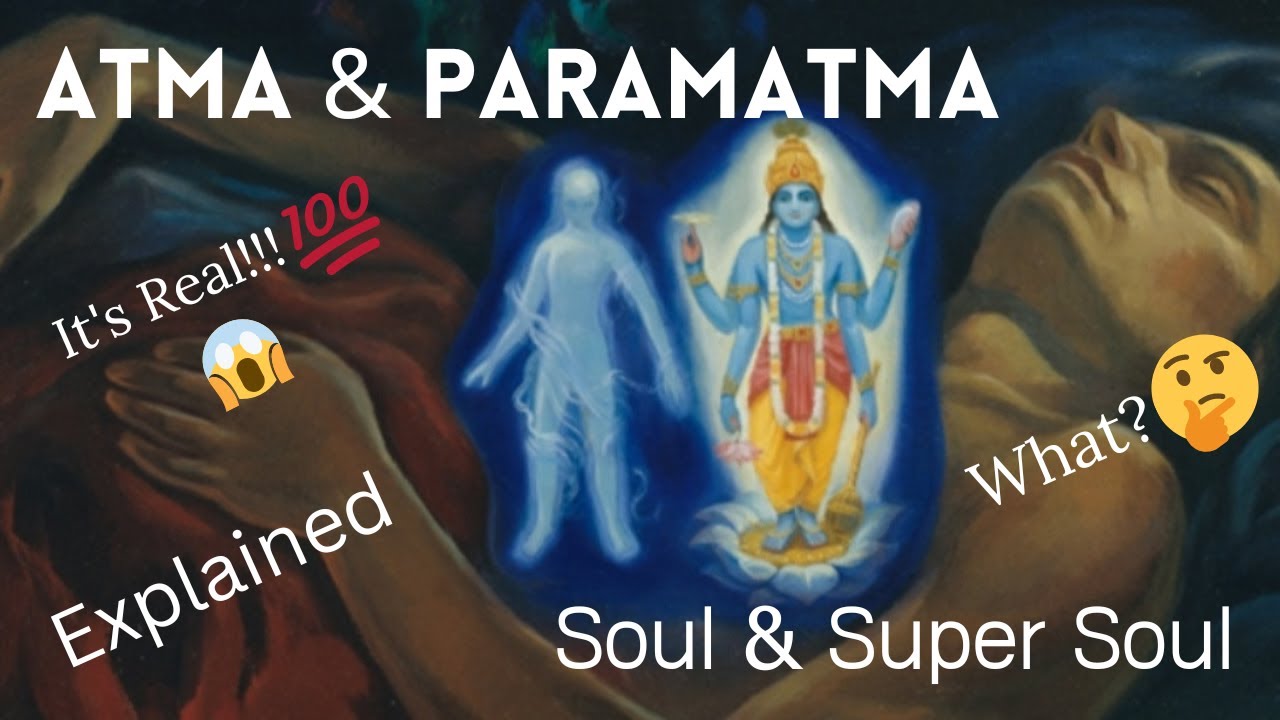
Atma Anatma Parmatma


https://freeglobaluniversity.blogspot.com/search/label/Self

1. Atma (आत्मा) - The Individual Soul
  • Definition: Atma refers to the immortal, individual soul or self within every living being.
  • Nature: It is the true essence of life, distinct from the body and mind. It is unchanging, eternal, and divine in nature.
  • Jivatma: When the Atma is identified with the body and mind, it is called Jivatma (the embodied soul), which experiences the cycle of birth and death.
  • Goal: To realize that one is the pure Self (Atma) rather than the mortal body.
2. Anatma (अनात्मा) - The Non-Self
  • Definition: Anatma refers to everything that is not the Self (Atma). It is the "non-soul" or material reality.
  • Components: This includes the body, mind, intellect, ego, senses, and the material world.
  • Characteristics: Anatma is transitory, changing, perishable, and ultimately illusory (Maya) compared to the eternal nature of the Atma.
  • Distinction: Spiritual ignorance (Avidya) causes the Atma to identify with Anatma (e.g., "I am this body"), leading to suffering and bondage.
3. Paramatma (परमात्मा) - The Supreme Soul
  • Definition: Paramatma is the Supreme Soul, Divine Self, or God (Brahman).
  • Nature: It is the limitless, formless, omniscient, and omnipresent ultimate reality.
  • Relation to Atma: While Atma is the individual soul, Paramatma is the universal soul, sometimes described as the "Atma of all atmans".
  • Analogy: Atma is often compared to a spark (chingiari) and Paramatma to the fire (agni); or Atma as a drop of water and Paramatma as the ocean.
Summary of Relationships
  • Atma and Paramatma: They are fundamentally identical in nature. The separation exists only at the level of the body-mind complex.
  • Goal of Life: To remove the false identification with Anatma (non-self) and achieve the union (Yoga) or recognition of the Atma as one with Paramatma.
  • Process: Through self-realization, the individual soul (Atma) realizes its identity with the Supreme Soul (Paramatma), thus breaking the cycle of birth and death.

Labels