

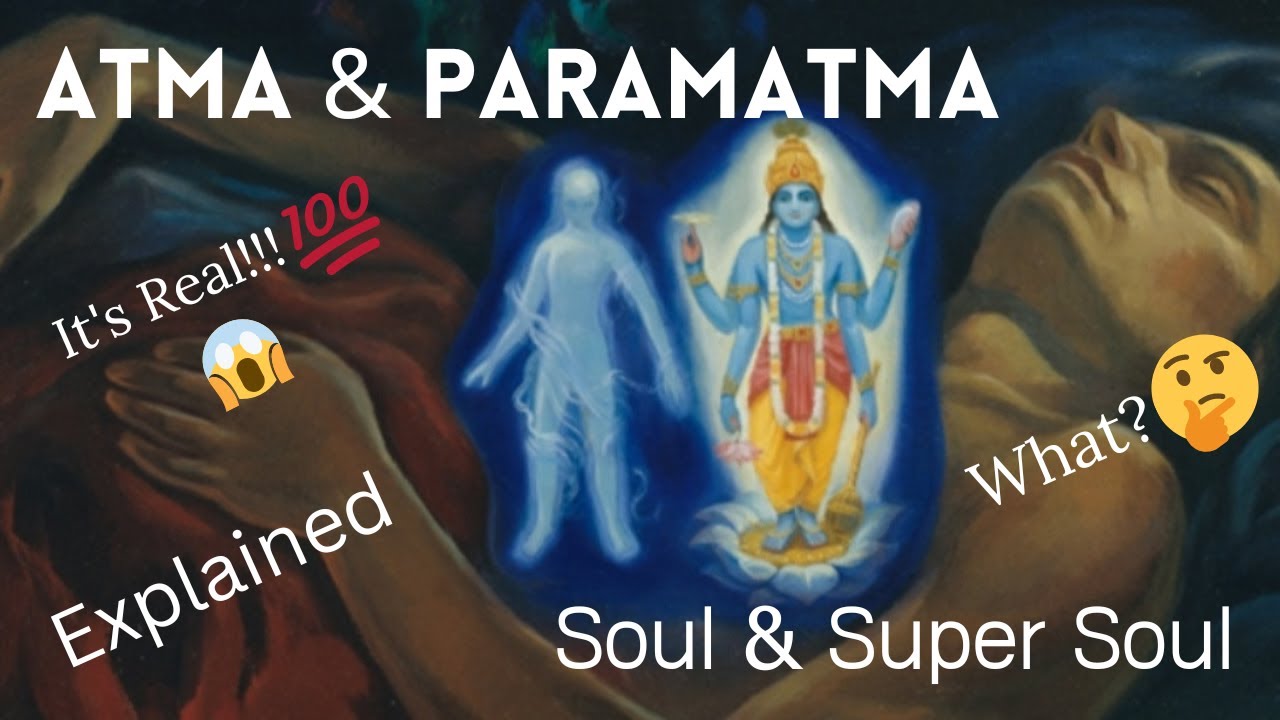

1. Atma (आत्मा) - The Individual Soul
- Definition: Atma refers to the immortal, individual soul or self within every living being.
- Nature: It is the true essence of life, distinct from the body and mind. It is unchanging, eternal, and divine in nature.
- Jivatma: When the Atma is identified with the body and mind, it is called Jivatma (the embodied soul), which experiences the cycle of birth and death.
- Goal: To realize that one is the pure Self (Atma) rather than the mortal body.
2. Anatma (अनात्मा) - The Non-Self
- Definition: Anatma refers to everything that is not the Self (Atma). It is the "non-soul" or material reality.
- Components: This includes the body, mind, intellect, ego, senses, and the material world.
- Characteristics: Anatma is transitory, changing, perishable, and ultimately illusory (Maya) compared to the eternal nature of the Atma.
- Distinction: Spiritual ignorance (Avidya) causes the Atma to identify with Anatma (e.g., "I am this body"), leading to suffering and bondage.
3. Paramatma (परमात्मा) - The Supreme Soul
- Definition: Paramatma is the Supreme Soul, Divine Self, or God (Brahman).
- Nature: It is the limitless, formless, omniscient, and omnipresent ultimate reality.
- Relation to Atma: While Atma is the individual soul, Paramatma is the universal soul, sometimes described as the "Atma of all atmans".
- Analogy: Atma is often compared to a spark (chingiari) and Paramatma to the fire (agni); or Atma as a drop of water and Paramatma as the ocean.
Summary of Relationships
- Atma and Paramatma: They are fundamentally identical in nature. The separation exists only at the level of the body-mind complex.
- Goal of Life: To remove the false identification with Anatma (non-self) and achieve the union (Yoga) or recognition of the Atma as one with Paramatma.
- Process: Through self-realization, the individual soul (Atma) realizes its identity with the Supreme Soul (Paramatma), thus breaking the cycle of birth and death.


No comments:
Post a Comment